Summary: Snoring happens when airflow makes relaxed tissues in the throat vibrate. Common contributors include alcohol, a stuffy nose, back sleeping, extra weight, and the shape of the airway, and snoring can sometimes signal sleep apnea. Breathing Wellness Orlando provides a free consultation to help find out what is behind it.
Snoring is common enough that many people treat it as a joke or a minor annoyance, and for plenty of people that is all it is. But snoring can also be a signal worth paying attention to, and understanding what tends to cause it makes it easier to tell the difference.
This guide explains in general terms what snoring is, the factors commonly linked to it, when it may be worth having checked, and where Breathing Wellness Orlando's own services fit in. It is general education, not a diagnosis, and an evaluation is what shows what is behind your own snoring.
What Snoring Is
According to the American Academy of Sleep Medicine, snoring happens when airflow makes the tissues in the throat vibrate. The sound can come through the nose, the mouth, or both, it is most often heard as you breathe in, and it can occur in any stage of sleep.
Snoring can be a sign of sleep apnea, a condition in which breathing repeatedly pauses during sleep, but plenty of people who snore do not have a sleep disorder. That is the main reason it is worth paying attention to.
It is also worth knowing that snoring can change over time. Something that was not a problem a few years ago can become noticeable with changes in weight, sleep habits, or congestion, and it can vary from night to night depending on things like alcohol or how well you slept.
Common Causes of Snoring
Snoring can have more than one cause, and several often overlap. According to MedlinePlus, the health information service of the National Library of Medicine, alcohol, sedating medicines, nasal congestion, extra weight, and the structure of the nose and throat can all contribute. The table below adds a few more factors.
| Factor | How It Relates to Snoring |
|---|---|
| Mouth and throat anatomy | A swollen soft palate or uvula, enlarged tonsils, or a large tongue can narrow the airway |
| Alcohol and sedatives | Alcohol, sleeping pills, and bedtime antihistamines can relax throat muscles and worsen snoring |
| Nasal problems | A stuffy nose from a cold or allergies, a crooked nasal septum, or nasal polyps can block airflow |
| Sleep position | Sleeping on the back may make snoring more likely |
| Extra weight | Extra tissue around the neck can press on the airway |
| Age, sex, and family history | Snoring is more common in men, becomes more common with age, and appears to run in families |
Which of these applies to you is something only an evaluation can sort out. The table describes general patterns, not a diagnosis.
Several of these factors can overlap. Someone might have nasal congestion, sleep mostly on their back, and have a family history of snoring all at once, which is part of why a general list can only take you so far.
When Snoring May Be More Than a Nuisance
Light, occasional snoring is common, so what matters more is the pattern and what comes with it. Loud and frequent snoring, tiredness during the day despite enough sleep, choking or gasping sounds at night, and a dry mouth or sore throat on waking are signs worth bringing up with Breathing Wellness Orlando.
| What You or a Partner Notice | Why It Is Worth Mentioning |
|---|---|
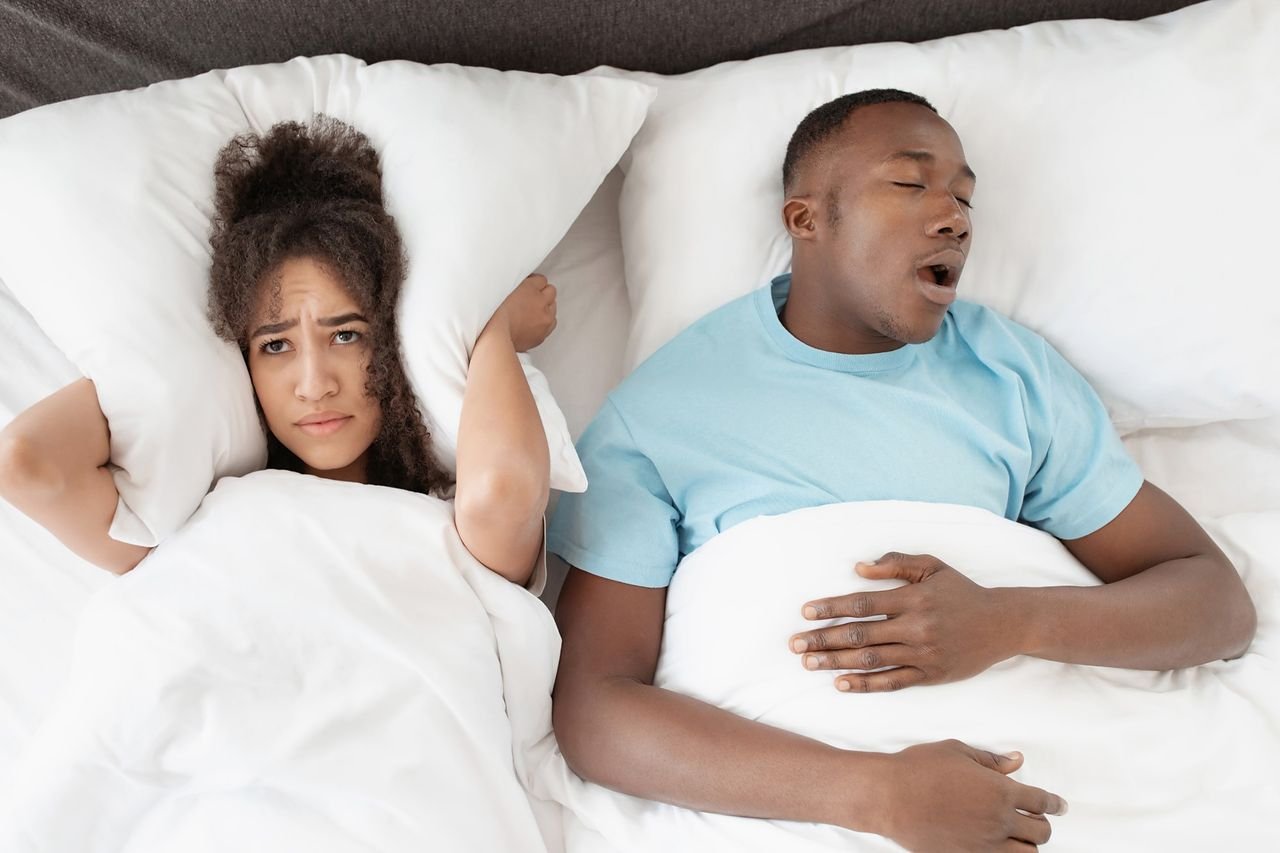
| Snoring loud enough to disrupt a partner's sleep | Frequent loud snoring can disrupt sleep for the snorer and their partner |
| Choking or gasping sounds during sleep | A recognized warning sign of sleep apnea |
| Waking with a dry mouth or an irritated throat | Also listed among the warning signs of sleep apnea |
| Waking up tired or sleepy during the day | Can point to sleep that is being interrupted |
| Snoring that does not improve with self-care | A pattern worth mentioning to Breathing Wellness Orlando |
Jotting down when snoring is loudest and what the evening looked like, such as whether you drank alcohol or slept on your back, can make a conversation with Breathing Wellness Orlando more specific.
Worth knowing: Snoring on its own does not mean you have sleep apnea, and quiet sleep does not rule it out. Sleep apnea is a medical diagnosis, made by a provider after an evaluation.
Snoring and Sleep Apnea at Breathing Wellness Orlando
Breathing Wellness Orlando offers non-surgical sleep apnea and snoring care, and it explains both conditions as sharing one root cause, a constricted airway. Its approach includes the Vivos DNA oral appliance, which the practice describes as non-invasive and pain-free, and it begins with a free consultation. Whether any option applies to you is a question for that consultation.
Curious whether your snoring is worth looking into? Request your free consultation with Breathing Wellness Orlando.
Because snoring is often noticed by someone else first, it can help to ask a partner or family member what they have observed, such as how often it happens and whether it seems to change from night to night. That kind of detail gives the practice more to work with. Readers who want more detail on sleep apnea care can find sleep apnea alternatives to CPAP in a related article.
See Our Patient Testimonial
A patient shares their journey back to sleeping and breathing better.
Sleep, Breathing, and Airway Evaluations for Adults
Because snoring can involve the nose, the throat, and sleep itself, an airway-focused look is a sensible place to start. Breathing Wellness Orlando offers a free sleep, breathing, and airway consultation for adults that begins with understanding the airway, with no pressure and no cost.
If you are not sure where to start, contacting Breathing Wellness Orlando is a reasonable first step.